
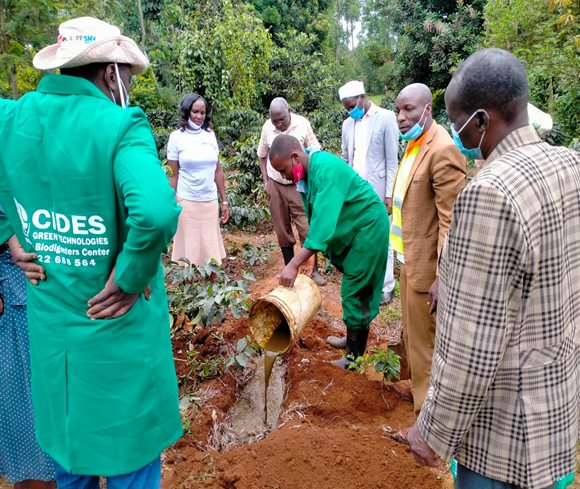
In Kitui County, interest in biogas and regenerative farming had been rising, but too often potential was lost for lack of expertise. Systems would be installed, then underutilized; bioslurry would pile up unused; youth had little access to green skills; women didn’t always know how to incorporate sustainable practices in home gardens. Without capacity, technology alone couldn’t deliver.
-
Biogas digesters poorly maintained, malfunctioning.
-
Households paying for fertilizers while ignoring that bioslurry could replace them.
-
Youth unemployment high in rural areas; little opportunity to learn technical green skills.
-
Women’s agricultural potential under-leveraged in household food security.
Structured, Hands-On Training Program
Responding to demand, CIDESgreen launched a capacity development initiative. Key elements:
-
Awareness Campaigns: Educating farmers, women, youth about biogas, bioslurry, and regenerative agriculture.
-
Demonstration Farms: Live digesters, kitchen gardens using bioslurry, field trials to show yield differences.
-
Technical Training for Artisans: How to build, maintain, repair biogas systems; piping; dome masonry; safety protocols.
-
Women-Centric Modules: Incorporation of bioslurry in kitchen gardens; nutritional crops; household budgeting with savings from fuel and fertilizer.
Implementation Process
-
Month 1: Mobilization and community meetings; baseline survey to record households’ energy and fertilizer expenditure, awareness levels.
-
Month 2–3: Conduct training sessions; spread across several zones in Kitui for accessibility.
-
Month 4: Apprenticeships and hands-on work; new artisans practice installations in real settings.
-
Month 5: Follow-up monitoring and support; feedback loops to fix technical issues or usage mistakes.
Results & Measurable Impact
-
Increased Yields: Farmers switching to bioslurry saw 30–40% higher crop yields, especially in maize/vegetables.
-
Cost Reductions: Fuel, fertilizer, and chemical input costs dropped substantially.
-
Job Creation: Dozens of youth certified as biogas artisans; several now earning income by performing installations or repairs.
-
Women Empowered: Kitchen gardens with organic inputs produced food for household nutrition and surplus for income.
-
Behavioral Change: Communities developed maintenance culture; gas digesters tended regularly; bioslurry used properly; waste utilized rather than ignored.
There was joy in discovery — when farmers tasted vegetables grown with bioslurry, when youth saw their own hands build a gas dome, when women harvested produce from their gardens. Not invisible benefit, but visible change: healthier bodies, cleaner air, fuller plates, families working with pride.
This program delivers multiplier effects: one trained artisan serves multiple households; one kitchen garden feeds many; savings from inputs go back into community. The model is cost-effective, scalable, and holistically addresses environment + food security + economic growth. It builds local capacity so CIDES’ projects aren’t one-offs but sustained.